
























































Best Practices for Building Agents Recap
Arthur
AI Fest

We might be biased, but AI is the most exciting societal development in decades. So, why not treat it with the energy and enthusiasm it deserves?

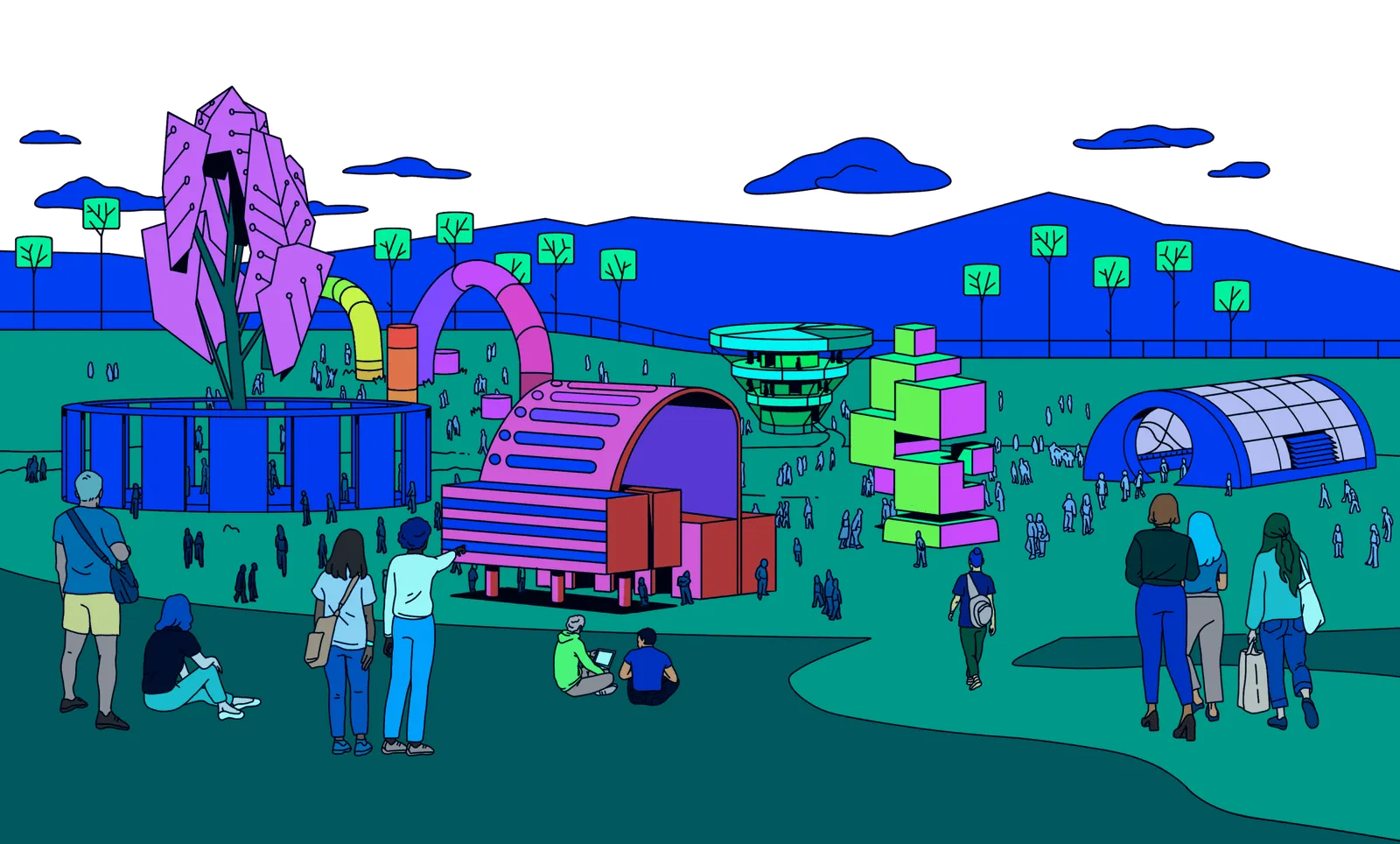
AI Fest festival grounds illustration
September 26th - 11am-4:30pm ET
Free to Attend
Virtual

AI Fest will have tons of panels and sessions where folks can learn about its implications, applications, and innovations—but at its core, AI Fest is a celebration of AI. On Thursday, September 26th, we’ll share knowledge, debate some of AI’s most controversial topics, host hands-on workshops, and have a blast along the way.

After all, who said conferences can’t be fun?

Speakers

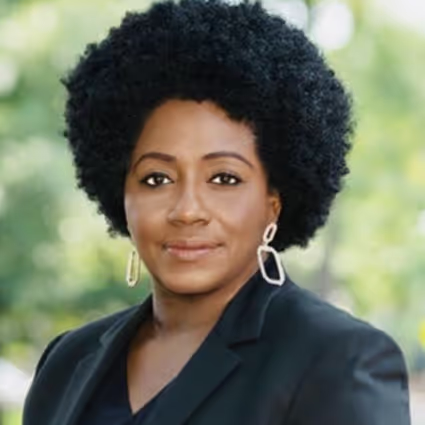
Dr. Avijit Ghosh

Dr. Avijit Ghosh

Applied Policy Researcher, ML & Society Team

Hugging Face

Renée Cummings

Renée Cummings

Governance Studies, Professor of Practice in Data Science

University of Virginia

Priyanka Oberoi

Priyanka Oberoi

Staff Data Scientist

Axios HQ

Vik Scoggins

Vik Scoggins

AI/ML Product Lead

Coinbase

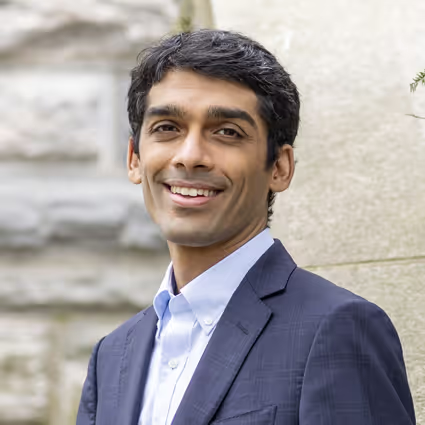
Bitun Banerjee

Bitun Banerjee

VP, AI Product Lead

JPMorgan Chase & Co.

Adam Zhao

Adam Zhao

Co-founder

SafeNest

Michael Brent

Michael Brent

Director of Responsible AI

Boston Consulting Group

Alyssa Lefaivre Škopac

Alyssa Lefaivre Škopac

Responsible AI Strategist

Angelina Wang

Angelina Wang

Postdoc

Stanford HAI and RegLab

Abhinav Raghunathan

Abhinav Raghunathan

Founder

EAIDB

Lily Xu

Lily Xu

Postdoc

University of Oxford

Gabe Weisz

Gabe Weisz

Fellow

AMD

Meinolf Sellmann

Meinolf Sellmann

Chief Technology Officer

InsideOpt

Anna Bethke

Anna Bethke

Director of Data Science & Ethical AI

Included

Daniel Chesley

Daniel Chesley

Principal

Work-Bench

Tiffany Luck

Tiffany Luck

Partner

New Enterprise Associates

Bear Douglas

Bear Douglas

Director of Developer Relations

Pinecone

Nicholas Mattei

Nicholas Mattei

Associate Professor

Tulane University

Victoria Vassileva

Victoria Vassileva

Strategic Account Director, AI Performance & Responsibility

Arthur

Donny Greenberg

Donny Greenberg

CEO

Runhouse

Leah Morris

Leah Morris

Senior Director, Velocity Program

Radical Ventures

Var Shankar

Var Shankar

Chief AI & Privacy Officer

Enzai

Maria João Sousa

Maria João Sousa

Executive Director

Climate Change AI

Matt Lynley

Matt Lynley

Founder

Supervised

Raz Besaleli

Raz Besaleli

AI Consultant

Shruthi Velidi

Shruthi Velidi

Founder

Communitek

Tucker Fross

Tucker Fross

Head of Product

RippleMatch

Teresa Datta

Teresa Datta

ML Research Scientist

Arthur AI

Ian Eisenberg

Ian Eisenberg

Head of AI Governance Research

Credo AI

Ben Schmidt

Ben Schmidt

VP of Information Design

Nomic AI

Marcus Sawyerr

Marcus Sawyerr

Founder & CEO

EQ app

Nakshathra Suresh

Nakshathra Suresh

Co-Founder

eiris

George Davis

George Davis

Founder & CEO

Frame AI

Joyce Chen

Joyce Chen

AI Lawyer & Former Data Privacy Officer at Pendo.io

Bryan Subijano

Bryan Subijano

Principal

Greycroft

Gurpreet Kaur Khalsa

Gurpreet Kaur Khalsa

Senior Product Manager - Securing GenAI

Palo Alto Networks

Vedant Nanda

Vedant Nanda

AI Research Engineer

Aleph Alpha

Adam Wenchel

Adam Wenchel

Co-founder, CEO

Arthur

Lily Li

Lily Li

Data Privacy & AI Lawyer

Metaverse Law

Pranjal Bajaj

Pranjal Bajaj

Senior Data Scientist

Boston Consulting Group

Amit Singh

Amit Singh

Global Head of GTM & Use Cases, Generative AI & ML Partnerships

AWS

Alejandro Fernandez

Alejandro Fernandez

Product Manager, ML/AI

Square

Aaron Ogunro

Aaron Ogunro

Associate Attorney

Polsinelli

Dylan Itzikowitz

Dylan Itzikowitz

Principal

South Park Commons

Ben Feuer

Ben Feuer

AI & ML Ph.D. Researcher

New York University

Jayeeta Putatunda

Jayeeta Putatunda

Senior Data Scientist

Fitch Ratings

Charlie Flanagan

Charlie Flanagan

Head of AI

Balyasny Asset Management

John Dickerson

John Dickerson

Co-founder, Chief Scientist

Arthur

Tim Rich

Tim Rich

Head of AI

Horizon Media

Seth Levine

Seth Levine

Lead ML Scientist

Loris AI

Why should you attend?

We’re not like other conferences

From a live podcast to debates to hot takes galore, you will not only learn a ton, but you’ll be thoroughly entertained while you’re at it.

Choose your own adventure

Like at a music festival, AI Fest will have multiple different stages. There’s something for everyone— whether you’re a founder, a CTO, an engineer, or a student.

Content requests

Have a topic you’d like to learn more about? Shoot us an email at events@arthur.ai and we’ll do our best to include it in the programming!

Connect with other attendees

After the virtual event, we have a limited number of spaces for attendees to join us in NYC for a post-conference reception! Stay tuned for more details.

Access to all virtual content

Can’t join live but still want access to the sessions? Register and you’ll be the first to know when they’re available on-demand!

Explore the stages

Stage 1: Rocking the Enterprise

Hear from people who are successfully creating real value with AI at some of the leading companies in the world. Learn how to accelerate AI adoption in large enterprises, with proper controls and governance to ensure smooth rollouts.

Stage 2: AI’s Next Big Hits

The fast-emerging trends that are shaping AI’s future: from multimodal models that natively comprehend and create audio, images, video, and text, to increasingly autonomous agents, to custom, fine-tuned, high-performance models—and many more.

Stage 3: Societal Soundwaves

AI deployment is more than just engineering. On this stage, we’ll discuss from a sociotechnical and human-centric perspective how AI is impacting and will continue to impact society—from the environment to the workforce and more.

Find a Session

Stage One

11:15 - 11:45 AM ET

Evaluation Is All You Need!

Jayeeta Putatunda

Large Language Models (LLMs) have transformed natural language processing (NLP), but their evaluation poses challenges due to the lack of standardized benchmarks for diverse tasks. The opaque, black-box nature of LLMs complicates understanding their decision-making processes and identifying biases. Effective evaluation metrics are crucial, especially as LLM architectures rapidly evolve, requiring adaptive methodologies. The AI community is coming together to address this, facilitate benchmark development, and provide tools for consistent model assessment across domains. We will also evaluate some of the OS evaluation metrics and walkthrough of code using a demo dataset.
Stage Two

11:15 - 11:45 AM ET

Leveraging Data and Artificial Intelligence for Human Centered Computational Reasoning and Choice

Nicholas Mattei

In recent years there has been an explosion in interest in topics that sit at the intersection of applications of computing technology and societal issues. There has been significant work in the academic, industrial, and policy spaces to clarify and formalize best practices regarding the deployment of computational decision making (e.g., artificial intelligence and machine learning) at scale. Part of this work has been a newfound interest in many age old conversations about the roles and limits of technology and society. In this talk I'll survey some of these topics with an eye towards concerns around bias and fairness in application domains of my recent work including building recommender systems that are able to handle multi-stakeholder fairness concerns and our work at the Tulane Center for Community Engaged AI.

Stage Three

11:15 - 11:45 AM ET

Considering the Psychosocial Impact of Harnessing Technology for Good

Nakshathra Suresh

This talk will explore the psychological, social, ethical, and safety risks of integrating emerging technologies, including AI, into daily life. Nakshathra, a cyber criminologist and co-founder of eiris, will highlight the growing cyber safety challenges posed by innovators who overlook end-user safety. She will discuss non-technical risks like harm, bias, and safety, advocating for human-centered design, as well as case studies on the successes and failures of digital safety by design. The talk aims to inspire companies, particularly in tech and startups, to prioritize cyber safety and consider marginalized groups and minority communities in their innovation processes.

Stage One

11:45 AM - 12:30 PM ET

Elevating Customer Experiences with ML & NLP

Seth Levine, Bitun Banerjee, George Davis, Bear Douglas

Join industry leaders as they delve into the transformative power of ML and NLP in enhancing customer experiences. This panel will explore cutting-edge techniques for leveraging ML and NLP to create personalized, efficient, and engaging interactions. Discover how these technologies are being used to understand customer needs, predict behaviors, and drive satisfaction. The discussion will highlight real-world applications and success stories, offering insights into the future of customer-centric innovation.

Stage Three

11:45 AM - 12:30 PM ET

Championing Ethical & Responsible AI: A Conversation with Leaders

Abhinav Raghunathan, Alyssa Lefaivre Škopac, Michael Brent, Gurpreet Kaur Khalsa, Shruthi Velidi

In this panel, you'll hear from industry pioneers who are at the forefront of ethical AI development. This session will delve into the challenges and opportunities of implementing responsible AI practices, with insights from those who are setting the standard. Discover how these leaders are navigating complex ethical considerations, fostering transparency, and ensuring fairness in AI technologies.

Stage Three

12:30 - 1:00 PM ET

Ethics, Equity, and Empowerment in AI: A Fireside Chat with Renée Cummings

Victoria Vassileva, Renée Cummings

Join us for a thought-provoking fireside chat with Renée Cummings, renowned AI ethicist and Data Science Professor of Practice at the University of Virginia, as we explore the critical intersection of ethics, equity, and empowerment in AI. In this session, moderated by Arthur's very own Victoria Vassileva, Renée will discuss how AI technologies can both challenge and advance social justice, and the responsibilities of developers and organizations to ensure equitable outcomes. Gain insights into the ethical implications of AI deployment and discover actionable strategies for building more inclusive and accountable AI systems.

Stage Two

12:30 - 1:00 PM ET

The Era of Inference: Efficient and Controllable Serving of LLMs

Vedant Nanda

This increased adoption of LLMs requires serving them efficiently to many users. In the first part of the talk, I will highlight key concepts that help us achieve high throughout LLM serving such as tensor parallelism, paged attention and quantization. In the second part, I will talk about how to control decoding from LLMs using “control vectors”. Conceptually, these are vectors in the activation space representing directions of a certain concept (e.g., humor) that can be amplifies or suppressed at inference, giving users a more interpretable axis of control on LLM decoding.

Stage Two

1:30 - 2:00 PM ET

What’s New with the Arthur Platform

Arthur Product Team

Arthur’s product team will host a special session showcasing some of the latest developments in the platform. We can’t say what they are just yet, but you won’t want to miss this one!

Stage Three

1:30 - 2:15 PM ET

Environmental Challenges and AI: Shaping a Sustainable Future

Lily Xu, Maria João Sousa, Teresa Datta, Pranjal Bajaj

In this panel, experts will explore the powerful role AI plays in addressing today’s most pressing environmental issues. This session will highlight how AI-driven solutions are being used to combat climate change, enhance conservation efforts, and promote sustainable practices—and some of the ecological challenges that AI presents as well. Learn about the latest innovations at the intersection of technology and ecology, and discover how AI can be harnessed to build a more sustainable future.

Stage One

1:30 - 2:15 PM ET

Legal Considerations for the Use of AI in the Enterprise

Aaron Ogunro, Var Shankar, Ian Eisenberg, Joyce Chen

This panel will explore the complex legal landscape surrounding AI adoption in business. Experts will discuss regulatory compliance, data privacy, intellectual property, and ethical concerns, providing actionable insights for companies integrating AI into their operations. Attendees will gain a deeper understanding of the potential legal risks and how to navigate them effectively to ensure responsible and compliant AI use in the enterprise.

Stage Three

2:15 - 2:45 PM ET

Human Reactions to Being Erased in Generative AI

Dr. Avijit Ghosh

In a 2022 paper, Can There Be Art Without an Artist?, Dr. Avijit Ghosh and Genoveva Fossas discussed the work of human artists within training data for generative AI tools. In the appendix, they connect the practice of scraping training data without consent to its famous precedent in biology, citing the case of Henrietta Lacks. Because of You is a digital video work inspired by this connection, and subsequent conversations between Eryk Salvaggio and Dr. Avijit Ghosh, which began at a presentation on AI and art at SXSW in 2023.

Stage One

2:15 - 2:45 PM ET

Can Anyone Tell Me What an “AI Platform” Is?

Donny Greenberg

As companies focus on operationalizing their AI development and infrastructure, especially those coming off a long period of GenAI exploration, it’s worth taking a moment to identify the evolution of the AI stack and define just what an “AI platform” is. Part of the confusion is that the notion of an “AI Platform” has changed every ~3 years for the last decade. In this talk, we will walk through the history of what the cutting edge AI platform has been, and why past approaches failed to evolve with team needs. Finally, we will address how modern AI development is significantly more diverse and sophisticated than ever before, with heterogenous data types and compute requirements.

Stage Two

2:30 - 3:00 PM ET

You Also Need Good Hardware & Software

Gabe Weisz

Attention is not all you need—running inference on large language models and other modern neural network topologies would be too slow to be useful without specialized computing devices. In this talk, Gabe will discuss how model design, hardware design, and software interact, and provide a high-level overview of the accelerator space including GPUs, NPUs, and custom accelerators.

Stage One

2:45 - 3:30 PM ET

AI at Scale: Turning Models into Business Solutions

Catherine Chen, Vik Scoggins, Tim Rich, Alejandro Fernandez

In this panel session, experts will explore the transformative journey from AI models to impactful business applications. Discover strategies for scaling AI across organizations, overcoming operational challenges, and driving measurable outcomes. Gain insights into real-world examples and learn how to unlock the full potential of AI to deliver tangible business value.

Stage Three

2:45 - 3:30 PM ET

Work 2.0: AI’s Role in the Future of Employment

Marcus Sawyerr, Anna Bethke, Tucker Fross, Bryan Subijano

In this panel session, industry experts will delve into the transformative impact of artificial intelligence on the job market. Explore how AI is reshaping roles, creating new opportunities, and redefining the skills needed for tomorrow’s workforce. Join us to gain insights into how organizations and individuals can adapt to this rapidly evolving landscape, ensuring they remain competitive and resilient in the face of AI-driven change.

Stage Two

3:00 - 3:45 PM ET

Venture Perspectives: The Next Big Moves in AI

Dylan Itzikowitz, Danny Chesley, Leah Morris, Tiffany Luck

In this session, leading venture capitalists will explore the most promising trends and innovations shaping the future of artificial intelligence. Discover the key areas attracting investment, the challenges and opportunities within the AI landscape, and how these experts are positioning their portfolios to capture the next wave of AI-driven growth.

Stage Three

3:30 - 4:00 PM ET

LLM Representation of Personas

Angelina Wang

LLMs are increasing in capability and popularity, propelling their application in new domains—including as replacements for human participants in computational social science, user testing, annotation tasks, and more. Angelina will discuss a recent paper she authored that argues analytically for why LLMs are likely to both misportray and flatten the representations of demographic groups, explaining why this is harmful for marginalized groups. At the same time, in cases where the goal is to supplement rather than replace human participants (e.g., pilot studies), we provide inference-time techniques that we empirically demonstrate do reduce, but do not remove, these harms.

Stage One

3:30 - 4:15 PM ET

From Investment to Impact: The ROI of AI in the Enterprise

Amit V. Singh, Pri Oberoi, Meinolf Sellmann, Matt Lynley

Explore how AI investments are transforming into tangible business outcomes in this insightful session. Industry experts from top organizations will discuss strategies for maximizing returns on AI initiatives, highlighting real-world examples of AI-driven growth and efficiency. Gain actionable insights into measuring the success of AI projects, from initial investment to long-term impact.

Stage Two

3:45 - 4:15 PM ET

Embeddings Must Be Seen to Be Believed

Ben Schmidt

Embedding models are a foundational part of all modern AI systems, and their representations of documents are of potentially great value to anyone with large uncategorized collections of text or images. But high dimensional spaces are also intrinsically hard to understand, which makes providing useful interfaces to embedding spaces both important and difficult. This talk will talk about the ways that GPU-accelerated visualization, interaction, and new filters make the web browser one of the most exciting places to be making AI models interpretable and accessible today.

Stage Three

4:00 - 4:30 PM ET

Style Over Substance: Failure Modes of LLM Judges in Alignment Benchmarking

Ben Feuer

The release of ChatGPT in November 2022 sparked an explosion of interest in LLM alignment with human values, preferences and standards. Existing methods claim superiority by virtue of better correspondence with human pairwise preferences, often measured by LLM judges. But do LLM-judge preferences translate to progress on other, more concrete metrics for alignment, and if not, why not? Recent joint research with NYU, Columbia and Arthur.AI shows that (1) LLM-judgments do not correlate with concrete measures of safety, world knowledge, and instruction following; (2) LLM judges have powerful implicit biases, prioritizing style over factuality and safety; and (3) the supervised fine-tuning (SFT) stage of post-training, rather than RLHF, has the greatest impact on objective measures of alignment.

Reserve your spot today.

AI Fest festival grounds at night illustration